A few minutes of everyday upkeep can stop ordinary mess from turning into a weekend-long cleaning project, and daily homekeeping tricks make that easier. Your home is where you live, eat, rest, and gather with family, so signs of daily life are normal.
Small, repeatable habits can keep the busiest areas usable without taking over your day. Choose the ideas that fit your space, energy, and schedule. You can leave the rest for another time, then adjust as your routine changes. The aim is not to make every room look staged or untouched; it is to make everyday tasks feel less daunting and give you a comfortable place to come back to.
A few minutes spent on a useful task can make the next part of life easier, even when the whole house is not in order. Aim for a home that feels manageable and welcoming, not one that looks untouched.
Key Takeaways
- Choose a small number of daily tasks that suit your schedule.
- Use a brief reset to return misplaced things to their usual homes.
- Focus on the areas you use most, rather than cleaning every room daily.
- Give everyday items a clear place to go when you finish using them.
- Share repeatable tasks with the people who live in your home.
- Adjust the routine when your week or energy changes.
How Can You Build a Realistic Daily Cleaning Routine?
A workable routine starts with a short list of repeatable jobs, not a full-house cleaning checklist. Choose daily tasks that make your home easier to use, then fit them into the time you actually have. Start small, since a realistic plan is easier to repeat than an ambitious schedule.
Five useful daily tasks are making beds, checking floors, wiping counters, tackling clutter, and doing laundry. Treat them as a menu, not a demand to do all five every day. Your daily cleaning handles small messes as they arise; weekly tasks take care of deeper chores across the week.
| Task | Typical time | A practical use |
|---|---|---|
| Dusting | 5-7 minutes | A small surface area |
| Vacuuming | About 10 minutes | One high-traffic zone |
| Putting away items | About 15 minutes | A cluttered room |
Those times vary with the amount of clutter and the size of the room. Combined daily cleaning tasks take about 15-30 minutes, while established weekly tasks can take 10-15 minutes at a time. Choose a schedule that leaves space for meals, work, rest, and the other things your day requires.
Pick a few daily tasks that protect the parts of your home you use most; the rest can wait for its place in the weekly plan.
Use a simple plan to connect a task with a natural point in your day, such as wiping counters after a meal. You can also split upkeep into short blocks instead of setting aside one long stretch. Keep the schedule visible if that helps you remember what you chose, but let it guide you rather than grade you.
Pick one daily task to anchor the routine, then add another only after the first feels manageable.
1. How Can Daily Homekeeping Tricks Keep a Bedroom Tidy?
Making the bed each morning gives the bedroom one immediate point of order, even if the rest of the room is still in use. It also makes a small room look calmer without requiring a full tidy. One clear surface can change how the whole space feels when you walk in.
Put worn clothes straight into a hamper instead of leaving them on the floor or a chair. That simple destination prevents a few shirts from turning into a confusing pile. Keep the hamper where you change, not tucked in a closet you rarely open.
If bedding feels damp, you can pull the covers back and let the bed air for about 1 hour before making it. This is an optional choice, not a rule for every bedroom or every morning. When the bedding feels dry and comfortable, make the bed as part of your usual start to the day.
A nightstand can collect cups, chargers, books, and small items quickly. Keep only the essentials you use there, such as a lamp and the book you are reading. Move the other things to their proper places when you notice them, rather than waiting for a larger bedroom cleanup.
Small bedrooms benefit from a clear path between the bed and the door. Put shoes together in one spot and keep the floor open enough to move around safely. If clothes need another wear, choose a designated hook or rack rather than letting them drift across the room.
Keep the hamper easy to reach so worn clothes have a clear destination.
2. How Do You Reset the Kitchen After Meals?
A kitchen is easier to reset when dishes and food mess are handled as part of the meal, not left for later. Put dishes in the dishwasher as you use them, then clear the table when everyone finishes. Fresh spills are usually easier to deal with before food dries.
Use a short close-down routine to leave the kitchen ready for the next meal. Load the dishwasher as dishes are used, and run it when it is full. Mild dish soap and water work for many counters, but stone surfaces need a cleaner approved for their material.
Clear dishes and handle the dishwasher
Stack plates and bowls in the dishwasher in a way that leaves room for water to reach them. Scrape leftover food into the trash or compost before loading. If the dishwasher is already full of clean dishes, unload those first so dirty dishes have a place to go.
Running a full dishwasher helps you avoid repeated small loads. If it will not be full by bedtime, leave the dirty dishes arranged inside and run it when practical. A quick check for utensils caught between racks can prevent the door from blocking or the spray arms from turning.
Wipe counters and catch spills
After meals, wipe the table and the counters where you prepared or served food. Follow the product directions for your surface, and use a clean cloth rather than spreading crumbs into another area. A damp cloth works well for many fresh food marks.
- Load dirty dishes into the dishwasher.
- Run a full dishwasher.
- Wipe counters and the table.
- Rinse the sink.
Use water to rinse food scraps from the sink and leave the basin ready for its next use. If a spill reaches a seam or appliance edge, clean that spot before it hardens. Wipe up stovetop splashes while they are fresh, following the care guidance for the surface.
3. What Quick Bathroom Habits Prevent Buildup?
A quick wipe after getting ready can clear toothpaste spots and water marks before they dry. Wiping the bathroom sink, counter, and mirror takes about 2-3 minutes. Right after use is a convenient time because the supplies are already nearby.
A fast pass over the damp areas helps keep everyday residue from building up. Use a suitable cloth to wipe the sink and counter, then finish the mirror with a dry section to reduce streaks. Put away products you used so the next person has space to set things down.
After a shower, rinse the walls for about 30 seconds or make a quick pass with a squeegee. Both options move water off the surface so it can dry more easily. A squeegee also helps clear beads of water from glass doors without needing a full bathroom cleaning.
Leave the shower curtain open or the shower door ajar after bathing. Air can move through the enclosure as surfaces dry, instead of moisture staying trapped behind a closed curtain. Keep the bathroom door open too, if that suits your household and privacy needs.
Use a washable cloth for the sink and counter, then hang it somewhere it can dry between uses. Replace it when it is dirty or damp rather than using it to spread residue around. Store bathroom cleaner where you can reach it safely, away from children and pets.
A two-minute wipe is easier to maintain than a long scrub after spots have dried. The mirror, sink, and counter are visible areas, so a quick pass can make the room feel fresher without touching every fixture. Keep a washable cloth within reach so the wipe-down does not require searching for supplies.
4. How Can You Keep Laundry From Becoming a Pile?
Laundry stays more manageable when the clean load does not become a second pile waiting to be dealt with. Treat washing, drying, and putting clothes away as parts of one cycle. Finish the load by folding or hanging clean items after drying.
Set a simple cadence for bedding, towels, and clothing, then adjust it to your household. Change bedding weekly and wash bath towels after 3 uses. Replace a towel sooner if it is visibly dirty or damp.
| Item | Suggested cadence | Practical cue |
|---|---|---|
| Bedding | Weekly | Choose a consistent laundry day |
| Bath towels | After 3 uses | Replace sooner if visibly dirty or damp |
| Clothing | As needed | Fold or hang after drying |
Choose laundry days that match the amount your household creates. A smaller household may need fewer loads than a larger one, while active days can mean more frequent washing. A set day can help you remember bedding, but it should not force you to run a tiny load unnecessarily.
Check garment care labels before washing, drying, or using heat. Follow detergent directions for the load size, and avoid adding more product than instructed. Sorting items by color, fabric, or care needs can help protect clothes and make each load easier to handle.
Make clean clothes easy to put away by keeping hangers and baskets close to where you fold. If the load is too large to finish in one sitting, sort it into manageable groups and return to them when you can. The key is to keep clean laundry from becoming a permanent fixture on a chair or bed.
Choose a realistic laundry cadence that accounts for household size and how quickly clothes and towels are used.
5. How Do You Stop Clutter From Spreading?
Clutter is easier to contain when every frequently used item has a known place to return to. Give keys, chargers, books, and everyday tools a home that makes sense where you use them. Easy to reach storage makes putting things away less of a chore.
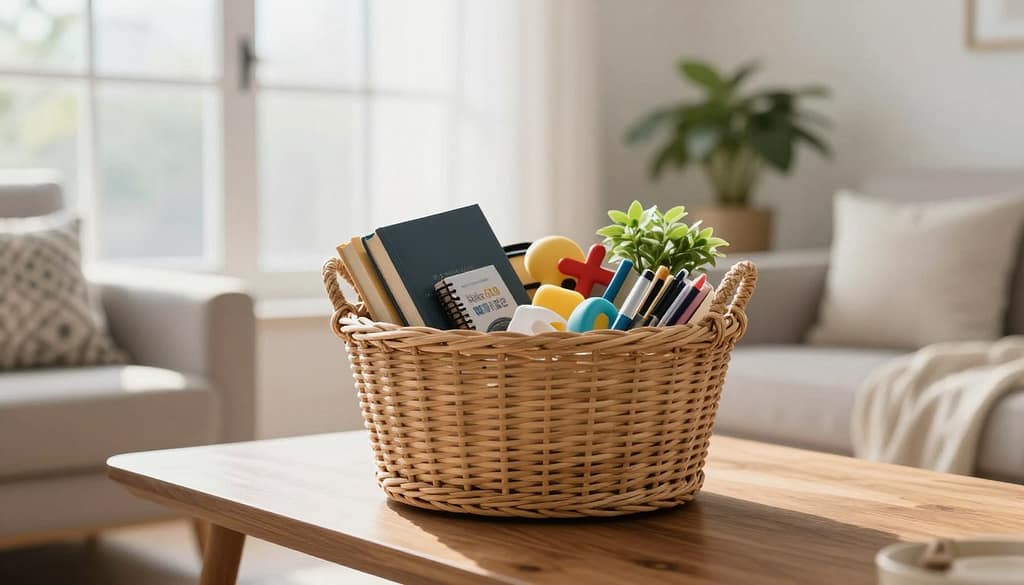
A 3-5-minute reset can collect everyday clutter before it spreads across shared surfaces. Keep a catch-all basket nearby for items that belong elsewhere, then carry them to their proper rooms. The basket is a temporary helper, not a permanent storage spot.
Give everyday items a clear home
Choose storage based on the things you actually use. A small tray can hold a few daily essentials, while a shelf may suit books or supplies. If an item keeps landing in the same place, consider whether its assigned home is too far away or awkward to use.
Make the return point clear to everyone in the home. Labels can help when several people share a shelf or bin, but they are not needed for every drawer. Keep storage simple enough that returning one item takes fewer steps than leaving it out.
Use a brief reset to collect strays
When a shared area starts to look scattered, use this short list:
- Return misplaced items to their homes.
- Collect dishes and carry them to the kitchen.
- Sort mail into what to discard and what to keep.
- Clear one surface you use often.
The basket can gather items from more than one room while you make a single trip. Take the contents back to their proper places once you are ready, instead of adding new items on top. Mail that needs action belongs in a clear, specific spot, not mixed with objects headed elsewhere.
Empty the catch-all basket before it becomes another surface that needs to be cleared.
6. What Floor Cleanup Matters Most Each Day?
Start with the floor where people and pets travel most, rather than trying to vacuum every room every day. The kitchen, entryway, and main walking paths often collect crumbs, hair, and outdoor dirt. Visible mess first keeps floor cleaning focused.
Sweep or spot-vacuum the most-used areas instead of cleaning every floor daily. A quick check can catch grit near the door or crumbs under the table before they travel farther. Choose the floor tool that suits the surface and the kind of debris you see.
A quick vacuum of high-traffic areas can be done daily when the floors need it. Homes with pets or children can consider a fuller pass over those areas twice weekly. That cadence targets the busiest zones without turning every day into a whole-house cleaning session.
Look at the kitchen floor after meals and the entryway after people come inside. Those areas can show the difference between a quick sweep and a longer vacuum. If hair is the main problem, gather it with a broom on hard flooring or use a suitable vacuum attachment on carpet.
Shoes-off habits and entry mats reduce the dirt that gets tracked through the home. Place a mat where people enter and keep it clean enough to catch debris. A small, regular check is also useful around pet beds, food bowls, and other places where hair or crumbs collect.
Vacuuming is not the only option for everyday floor care. A broom or dust mop may be quicker on a small hard-floor patch, while a vacuum can work better for carpet. Choose the tool that lets you clean that high-traffic path quickly and safely for its flooring type.
7. How Can an Entryway Stay Ready for Tomorrow?
A clear entryway makes it easier to leave on time and avoids a last-minute search for everyday essentials. Set up a small landing zone with hooks, a tray, or cubbies for the items you take out. One dependable spot keeps bags and keys from migrating across the house.
Sort mail daily into two basic groups: discard and keep. Recycle or discard unwanted mail, then file important pieces instead of leaving them on a surface. This keeps the doorway from becoming a holding area for papers that need attention.
Match the storage to what your household carries. Hooks can hold bags or coats, a tray can corral keys, and cubbies can give shoes a defined place. Keep the landing zone close to the door without blocking the route in or out.
Use a small tray for keys if they are often misplaced, and keep a bag on its hook once you return home. If you need a work badge, lunch container, or school item in the morning, place it with the bag before bedtime. That simple pairing can spare you a search when the day starts quickly.
Important mail should move beyond the entryway once you decide to keep it. Put bills, forms, and other papers in the folder or filing spot you already use. If something needs a response, place it where you will see it without letting every envelope become part of the display.
Before bed, put tomorrow’s keys and bag where you will see them on your way out.
8. What Makes a Quick Evening Living-Room Reset Work?
A brief evening reset can make the living room feel ready for the next morning without deep-cleaning it. Focus on the three visible zones: seating, tables, and the floor. Keep the scope small so the task fits naturally into the end of the day.
Return only the things that are out of place in those three zones. Fluff cushions, fold blankets after use, and return toys to a bin. A few minutes of focused tidying can restore the room without moving every item or cleaning every surface.

For seating, put cushions back where people can sit and fold blankets rather than leaving them in a heap. On tables, return cups and books to their usual places. On the floor, collect toys and other belongings that could trip someone the next morning.
Choose baskets or shelves only when they fit what your household actually uses. A toy bin can help children put things away, while a shelf may suit books or games. Storage that does not match the room’s regular activities often becomes another place for things to pile up.
Keep the path through the room open, especially around the main seating area. If a basket blocks the walkway, move it closer to the activity or choose a smaller option. A living room should still work for relaxing, play, and conversation after the reset is done.
Let the household’s evening habits shape what you put away. A blanket used every night may belong in a nearby basket, while a book in progress can stay on a shelf. Keep storage close to the activity it serves so putting items away takes fewer steps.
9. How Can the Whole Household Share Daily Tasks?
A routine is easier to maintain when each person has a small, repeatable job connected to their own mess. Share daily tasks among the people who use each space, rather than expecting one person to carry every job. Clear expectations help habits stick.
Give each household member work that suits their age and ability. Demonstrate the task before expecting it to become a habit. Keep the job small enough to repeat on ordinary days, not just when the house needs a major cleanup.
These options can help you decide who takes on what:
- Adults handle jobs tied to meals or household schedules.
- School-age children return their own belongings and help with simple resets.
- Young children pick up one thing before starting another.
Young children can use a 5-10-minute tidy before rest or nap time as a simple cleanup cue. Keep the direction clear, such as asking them to put away a toy before choosing another. A short, steady expectation is easier to understand than a long list of jobs.
School-age children can take responsibility for their own bags, books, and activity supplies. Adults can connect their jobs to routines they already manage, such as meal preparation or a household schedule. Share the work in a way that feels fair for the people involved.
When someone is learning a new task, show where items go and what finished looks like. Offer a reminder without taking over as soon as the job gets a little messy. Choose one shared cleanup cue, such as before rest time, and keep the expectation consistent.
How Can You Keep the Routine Flexible?
A routine should bend around the week you actually have, not punish you for missing a task. Keep a minimum plan for busy days, then make room for extra cleaning when time and energy allow. Flexibility matters when work, caregiving, illness, or an unexpected week changes the schedule.
A minimum routine can be one or two priority tasks that keep your home usable. One starting option is 5-10 minutes before leaving and 5-10 minutes after returning home. Increase either block to 15-20 minutes if time allows, but do not treat the longer version as a daily requirement.
Set a minimum for busy days
Choose the tasks that matter most when a day fills up. You might clear the dishes needed for the next meal or handle one small area that is affecting how you use the home. The point is to protect a little breathing room, not to squeeze every planned chore into a difficult day.
Missed weekly chores can be skipped rather than doubled up automatically. If your schedule allows, a Friday catch-up day can absorb one missed chore, but it is not a requirement to finish everything. Keep the rest of the week from turning into a chain of overdue tasks.
Adjust for irregular work and low-energy weeks
Irregular schedules need a plan based on workdays and days off, rather than a fixed weekday routine. A split shift, three days on and three days off, or a 12-hour workday can change when you have time to clean. Let the schedule fit your life, not the other way around.
| Schedule situation | What it looks like | A workable adjustment |
|---|---|---|
| Split shift | 3 days on and 3 days off | Pair a weekly task with a day off |
| Long shift | 12-hour workday | Keep only essential daily tasks on workdays |
| Low-energy week | Reduced capacity | Ask for help and pace tasks |
When your capacity drops, keep only the tasks that make the next day easier, and let the rest wait without guilt.
On a low-energy week, ask for help where you can and spread chores across the time available. If the week includes illness or caregiving, even the usual minimum may need to shrink. A useful schedule makes space for rest instead of treating rest as a failure.
On the next workable day, restart with one useful task and let the rest of the schedule stay flexible.
Conclusion
A tidy home is built through repeatable small actions, not one perfect cleaning day. Consistency matters more than a flawless room, and even one small reset can make the next part of your day easier. Your home can support daily life without looking untouched.
Choose one room or surface that would feel better with a little attention. Set out what you need, such as a cloth, a basket, or a place for loose items. Starting with a clear, manageable task makes it easier to return to the habit tomorrow.
Pick one habit to try tomorrow, and give it a clear place in your daily routine.