There’s something almost magical about that first warm day of the year. The moment you crack open a window, feel fresh air drift through your home, and realize winter is finally losing its grip.
Spring has a way of making us want to refresh everything: our wardrobes, our routines, and definitely our living spaces. But here’s the thing—giving your home that seasonal glow-up doesn’t require a complete redesign or a trip to an expensive boutique.
In fact, some of the most impactful spring decorating tricks cost next to nothing and take less time than binge-watching your favorite show.
These 7 expert-backed spring decor hacks will help you breathe new life into your home with minimal effort and maximum style.
The 2026 Spring Palette: Go Richer Than You Think
If your mental image of spring decor involves baby pinks and pale blues, it might be time for a refresh. This year’s spring color trends are ditching the pastel clichés in favor of something far more sophisticated.
Interior designer Nina Long explains, “This spring, interiors are embracing a softer, more storied sensibility, one that favors warmth over stark minimalism and craftsmanship over trend-driven novelty.” 
The colors making waves in 2026 are deeper, earthier, and surprisingly versatile. Sage green, terracotta, warm ochre, dusty plum, and ocean blue layered over creamy neutrals.
Anne Marie Ostmeyer and Kristine Perry of Slifer Designs say, “Our clients are gravitating toward nature-inspired warm neutrals.” Think wheat, caramel, terracotta, and warm grays with taupe and greige undertones.
“These aren’t the cool grays of the past decade; these are colors that feel cocooning and grounded,” they add. The beauty of these richer tones is that they feel intentional and timeless rather than trendy.
You can introduce them gradually through small accents (a terracotta vase here, a sage throw pillow there) without committing to a full room repaint.
And if you do want to go bold, Dvira Ovadia of Dvira Interiors recommends color drenching. This involves painting walls, trim, and ceiling in a single hue for what she calls a “cozy, immersive atmosphere” that feels sophisticated rather than overwhelming.
The key to making these deeper spring colors work is balance. Pair rich tones with lighter details—creamy whites, natural wood, and plenty of negative space—so your room feels refreshed rather than heavy.
Even a single accent wall in Valspar’s Warm Eucalyptus or a soft terracotta can completely shift the mood of a space without a major investment.
Hack 1: The Textile Swap (Your Easiest Win)
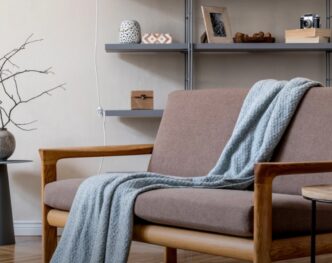
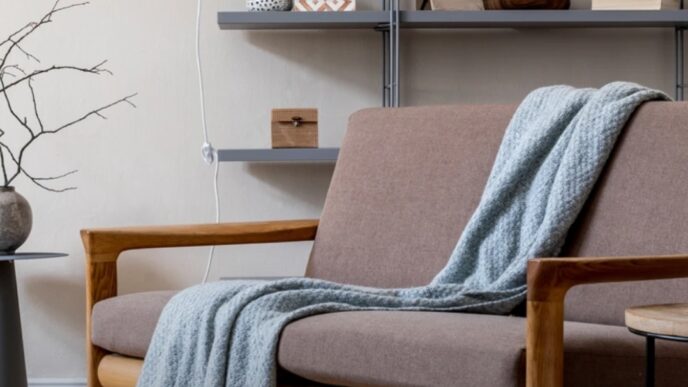
If there’s one spring decor hack that delivers the biggest payoff for the least effort, it’s swapping out your textiles. This isn’t about buying all new furniture: it’s about changing the skin of your space.
Heavy winter fabrics like velvet, wool, and faux fur that felt so cozy in December suddenly look and feel oppressive as temperatures rise. Trading them out for lighter materials instantly signals seasonal change.
“An easy way to update your space for spring is to swap your textiles for lighter-weight fabrics—wools for silks, velvets for wovens. It lifts the space for the warmer weather,” explains Anastasia Casey, founder of IDCO Studio.
Gemma Samuels, founder of Ankka design studio, agrees that, “Swapping cushion covers, throws, or even rotating rugs between rooms can introduce a sense of freshness without committing to anything permanent. “I tend to lean into slightly lighter or softer textures at the start of the year to counteract the heaviness of winter,” adds Gemma.
Here’s the pro move that’ll save you money and storage space: buy pillow covers instead of whole new pillows.
A 20-inch insert with an 18-inch cover gives you that plush, professional look, and you can fold a dozen seasonal covers into a single drawer. Look for linen, cotton, or lightweight block prints in spring tones.
The same logic applies to throws—trade your chunky knit for a gauzy linen or cotton weave.
Cindy Hattersley, lifestyle blogger and decorator, concurs with this approach. She says, “Trade out velvet and faux fur for linen, cotton, or a lightweight block print.”
“If you have heavier frames on your side tables or shelves, switch them for something lighter,” she adds. The whole swap takes maybe fifteen minutes, and the visual transformation is immediate.
Hack 2: Shop Your Yard
Nothing says spring like bringing the outdoors in, and the good news is that some of your best seasonal decor is growing right outside your door. Fresh branches, budding stems, and early blooms cost exactly zero dollars and have an authenticity that store-bought items struggle to match.
Cindy Hattersley shares her go-to strategy: “Trader Joe’s is my first stop for daffodils, tulips, ranunculus, (long-lasting) alstroemeria or lilacs. All beautiful, all under five dollars a bunch.”
But she also looks to her own yard: “Japanese maple branches in a vase on the coffee table look unexpectedly beautiful and last well. Pussy willows are a brilliant choice because they don’t need water—they actually rot if you put them in it—so they work anywhere in the room and last for months.”
The trick to making yard clippings look intentional rather than accidental is the vessel. A single branch of cherry blossom in a tall ceramic vase reads as sculptural and deliberate.
A cluster of daffodils in a thrifted glass jug feels cottage-charming. The Hano Decor team recommends “loose, garden-gathered arrangements over formal florist compositions—think wildflower bunches in simple glass vessels, branches of cherry blossom in tall ceramic vases, and single peony stems in bud vases scattered across shelves and windowsills.”
The key is casual abundance: several small arrangements distributed throughout a room feel more natural and spring-like than one large formal centerpiece.
If you’re not confident in your flower-arranging skills, start with olive branches—they’re forgiving, long-lasting, and add that effortless Mediterranean vibe that works in almost any decor style.
And don’t limit yourself to traditional vases. A vintage ceramic pitcher, a mason jar, or even a cleaned-out olive oil bottle can become the perfect vessel with zero additional cost.
Hack 3: The Thrift Store Treasure Hunt
Spring decorating on a budget isn’t about deprivation—it’s about seeing potential where others see castoffs. Thrift stores, flea markets, and estate sales are goldmines for seasonal decor if you know what to look for.
Robyn from Robyn’s French Nest has made a craft of it: “Always be sure to check the book section for books that have pretty art in the pages.” She frames vintage botanical prints from old books using thrifted frames, creating gallery-worthy wall art for pennies.
Her other secret weapons? Glass cloches (“often, they were part of an old clock and you can repurpose them”), ceramic bowls that double as planters, and terra cotta pots with genuine aged patina that “add so much texture and character.”
Col from My Life on Kaydeross Creek transformed a $1 wooden frame with light sanding and two coats of paint—first antique gold craft paint.
Rub ’n Buff in the same shade—to create a piece that “you would never know it’s the same frame!”
She paired it with an affordable Etsy print for a custom look on a shoestring budget.
This is her philosophy: “When considering what to buy at thrift stores, stick to the same color story throughout your home. That way, you already know the item will work and you can mix it in to any room or for any season.”
Some of the best thrift store finds for spring include:
| Thrift Find | Spring Hack | Estimated Cost |
| Ceramic bowls/pitchers | Use as planters for spring greenery or flower arrangements | $1–$5 |
| Terra cotta pots | Stack for centerpieces; aged patina adds character | $0.50–$3 |
| Glass cloches | Create instant spring vignettes with moss, eggs, or faux florals | $3–$8 |
| Picture frames | Paint and fill with free botanical prints | $1–$4 |
| Woven baskets/trays | Style with faux flowers or use for entryway organization | $3–$8 |
| Brass candlesticks | Group in sets of 2–3 for elegant spring tablescapes | $1–$3 each |
Hack 4: DIY Wreaths That Look Boutique-Bought
A fresh wreath on your front door is like a seasonal announcement to the neighborhood, but store-bought options can run $50 to $150. Making your own isn’t just cheaper—it’s surprisingly simple and lets you customize the look to match your style.
Alicia from Thrifty and Chic created a full, lush eucalyptus wreath for about $20 total using a grapevine wreath base and faux eucalyptus garland from a craft store.
Her method? Find the spine of the garland, hot-glue it around the wreath’s center, fill in bare spots with individual leaf clusters, and bend the wires so most leaves face the same direction for a polished look.
Jennifer from Cottage on Bunker Hill offers an even faster option: her moss wreath dupe takes about 10 minutes to make and replicates the $150 version sold at Anthropologie and Terrain.
For a rustic spring look, she also recommends bending pieces from an old grapevine wreath into a unique egg shape and layering in organic materials.
The key to a professional-looking DIY wreath is fullness—don’t be shy about packing in greenery until the base is completely hidden.
And if you’re not into crafting, even a simple loop of fresh eucalyptus or olive branches tied with twine makes an effortlessly chic door decoration.
Hack 5: The Zero-Dollar Room Refresh
Sometimes the most powerful decor hack doesn’t involve buying anything at all. Rearranging furniture, editing your accessories, and deep cleaning can make a room feel brand new without spending a dime.
“Rearrange something. This costs nothing and it’s remarkable how much difference it makes. In our old home, I moved a pair of chairs to a completely different spot in the room almost by accident one afternoon and couldn’t believe how much it changed the whole feeling of the space. I never moved them back,” says Cindy Hattersley.
The same principle applies to your bookshelves, coffee table, and mantel. Hattersley’s spring bookcase edit is ruthless and effective: She adds that, “I remove the heavier decorative objects, create more negative space, and add things that read as fresh in natural light.”
She pulls everything off, dusts the shelves, and curates intentionally. “Choose the pieces that speak to the season and store the rest,” she adds.
For coffee tables, she recommends and says, “Start empty, then add one vessel with fresh stems or greenery, one candle, one object you love. That’s it. The restraint reads as intentional rather than sparse.”
Don’t underestimate the power of clean windows and light fixtures either. Laura Gaskill, Houzz contributor, notes that “shiny-clean interior windows and mirrors make for a lighter, brighter home” and that dusty light fixtures can actually diminish illumination over time.
A damp microfiber cloth wiped over lamps and sconces can maximize the light in your space instantly.
And here’s a bonus: deep cleaning your home is free, and it creates the blank canvas that makes all your other spring decor choices shine.
Hack 6: Biophilic Touches That Cost Almost Nothing
Biophilic design—the fancy term for bringing nature indoors—is one of the biggest trends of 2026, and the good news is that it doesn’t require a living wall or a water feature.
As Janine Weeks, founder of Weeks Design, explains, “Biophilic design focuses on nature-infused spaces that connect people to the natural world.” But – she notes the trend is broader than greenery on a wall. It’s a holistic approach that includes “clean air, circadian-aligned lighting, and mindful material choices.” You can embrace this trend on any budget.
Start with what’s free: maximize natural light by pulling back heavy drapes, cleaning windows, and repositioning furniture so it doesn’t block light sources.
Mirrors placed opposite windows amplify daylight beautifully. Then add living elements strategically.
An asparagus fern is nearly impossible to kill and looks genuinely lush. Hattersley notes, “it lives on my side table and requires almost no attention.”
A small potted herb garden on your kitchen windowsill adds greenery, fresh fragrance, and culinary utility all at once.
For materials, look for natural textures like rattan, woven baskets, sea-grass, and unglazed ceramics. These elements “introduce a grounded feel even in lighter, airier spaces,” the team at Ivy Grey Interiors notes.
A woven tray on your coffee table, a rattan planter for your fern, or a stack of raw wood bowls on your kitchen counter all reinforce that nature-connected vibe without requiring a design degree.
Hack 7: Spring Scents Complete the Experience
Decorating for spring isn’t just visual—it’s sensory. The scent of your home has a powerful effect on mood and emotion. It can transition from winter’s heavy amber and spice to lighter, fresher fragrances. Scent has the finishing touch that makes everything feel cohesive.
Swap out your candles and diffusers for scents like lemon verbena, fresh linen, citrus blossom, or heirloom tomato.
(Hattersley’s current favorite: Flamingo Estate’s heirloom tomato candle, which she describes as “supple, green essence of balmy summer nights in the garden”).
Even your hand soap can contribute to the seasonal shift. The writer behind Little House of Four recommends you swap to seasonal scents like lemon verbena for hand soap. She also advises grabbing a Cypress and Orange candle for “an extra dose of mood-boosting goodness.”
The psychology behind this is real. Studies consistently show that scent is strongly linked to brain regions associated with mood and memory.
A home that smells like spring feels like spring, even on a cloudy day.
In Conclusion
The beauty of spring decorating is that it doesn’t have to be all-or-nothing. You don’t need to tackle every room or buy a cartful of new items.
Start with one area—the entryway, the living room coffee table, or your bedside table—and apply one or two of these hacks.
- Swap the textiles
- Bring in a branch from the yard
- Hit a thrift store and see what speaks to you
The cumulative effect of small, intentional changes is what transforms a space.
“We’re moving toward homes that feel lived-in and deeply personal. Spaces that reflect the people who inhabit them. Less perfection, more character,” says Anissa Zajac, founder of House Seven Design.
That’s the real secret of great spring decor. It isn’t about following a Pinterest-perfect formula. It’s about creating a home that feels fresh, light, and self-owned.